PAA 2026 Psychology Conference
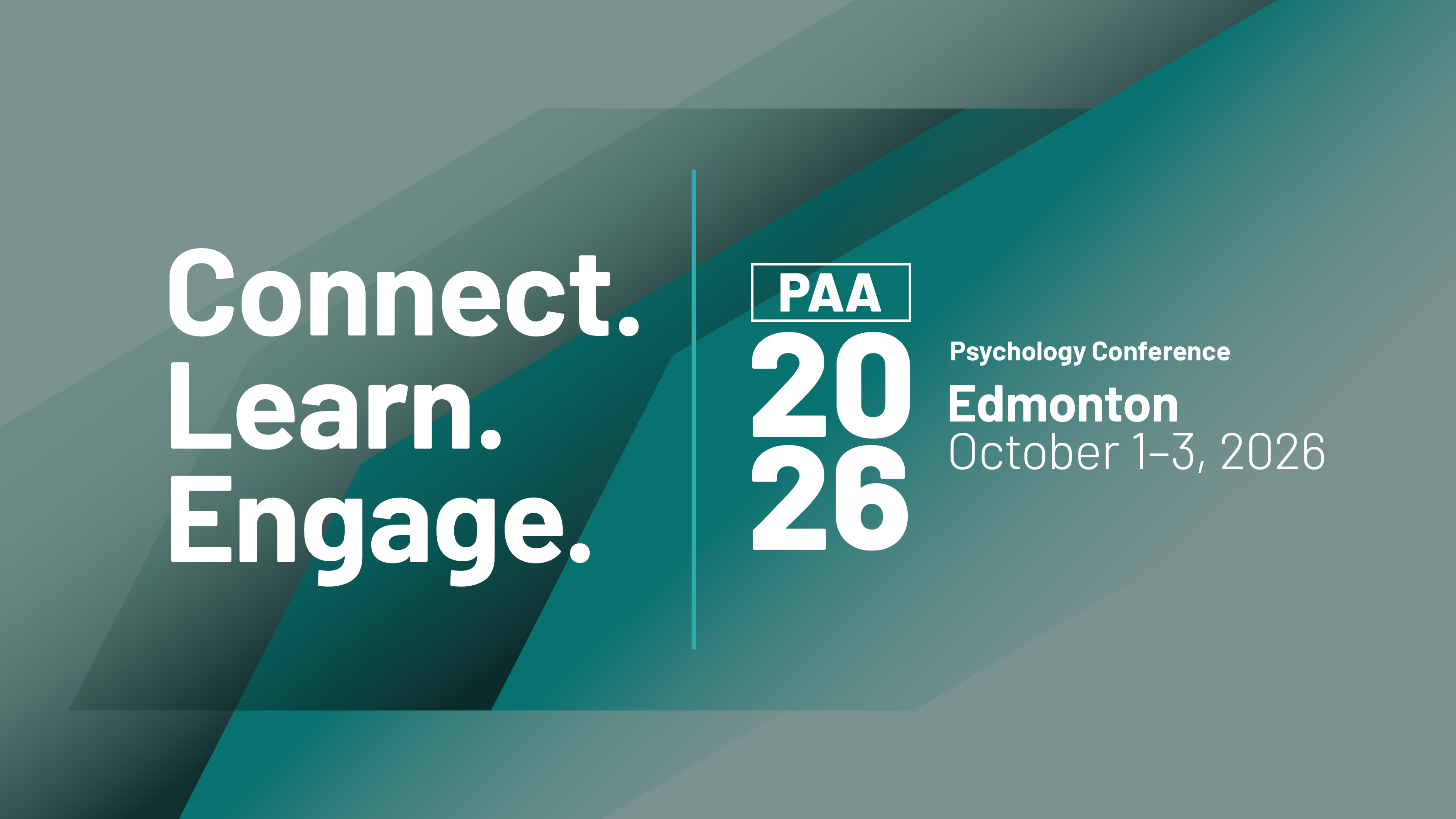
PAA is reviving its annual conference!
On October 1, 2 & 3, our members will be gathering in Edmonton for a new marquee event dedicated to the science and practice of psychology and continuing competence/professional development.
PLUS: PLATINUM PAA Members receive free registration for the conference!
The 2026 Conference is designed with your regulatory requirements in mind.
The conference will offer curated sessions and workshops that focus on professional knowledge and practice, ethics and jurisprudence, and Indigenous-focused education. It will also allow attendees to connect and engage with fellow psychologists. Full event details will be available soon.
Tentative Conference Topic & Event Schedule
Thursday, October 1, 2026 |
| Children & Adolescents Focus: Topics could include developmental assessment strategies, trauma-informed interventions, play therapy innovations, and youth resilience frameworks. |
| Adults & Older Adults Focus: Topics could include aging-related cognitive change, late-life depression and anxiety treatments, caregiver support models, and end-of-life psychological care. |
Friday & Saturday, October 2–3, 2026 |
Scientific Knowledge & Practice: These topics enhance psychologists’ foundational and advanced knowledge and support evidence-based practice and emerging areas of clinical science.
|
Professional Skills & Foundational Competencies: Focus on developing the competencies that support ethical, reflective, and scientifically grounded practice. These also mirror broader professional expectations outlined by regulatory and competency frameworks in psychology.
|
Ethics & Jurisprudence: These topics support regulated members’ understanding of CAP standards, ethical practice, and legal considerations.
|
Professional Engagement: Activities that promote professional growth and contribute to the wider professional community.
|
Indigenous-Focused Cultural Safety & Wellness : While not part of the core Areas 1–3, these topics align with CAP’s broader CCP goals and are valuable as complementary offerings.
|